|
Multi-Point Inspection |
About & Services |
Diagnostics & Pricing |
Mobile & Terms |
Estimate & Appointment |
Payment |
Contact |
|
|
|||||||||
|
|||||||||

|

|

|

|

|
|
What will happen when vehicles are still good, but no one can repair them?
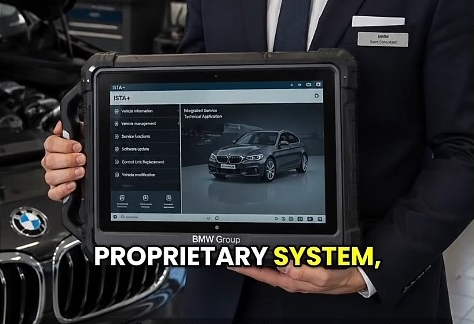 For decades, vehicle ownership has followed a simple assumption: if a vehicle is maintained properly and major mechanical components can be repaired or replaced, it can remain useful for many years. However, modern vehicles are changing that equation. Many people assume repair access concerns only vehicles under warranty. The reality is that the impact can continue long after the warranty expires and may eventually leave otherwise serviceable vehicles obsolete or outside their manufacturer support window, similar to software reaching end-of-life, leaving significantly fewer options to maintain or repair them. The reason is the increasing role of software, connectivity, and manufacturer-controlled systems in modern vehicles.
The growing role of telematicsModern vehicles use telematics, allowing manufacturers to communicate with vehicles wirelessly. These connected systems provide services such as diagnostics, software updates, and manufacturer-authorized functions that can affect how certain repairs, programming procedures, and component replacements are performed.Traditional vehicles primarily relied on mechanical systems and local diagnostic communication. Modern vehicles increasingly rely on software and connected services that may require access to manufacturer systems beyond the vehicle itself.
The challenge for independent repair professionalsIndependent professionals can purchase manufacturer-specific equipment, software, and subscriptions, but doing so requires significant ongoing costs for every vehicle brand they service.Many repairs can still be completed using traditional diagnostic tools and aftermarket solutions. However, a growing number of functions, such as over-the-air software updates, replacement module activation, remote configuration changes, and feature enablement, depend on manufacturer-controlled access. The concern is not that every repair requires dealership involvement. The concern is that more repair functions are becoming dependent on access to systems controlled by manufacturers.
The impact on long-term vehicle ownershipIf this trend continues, manufacturers may increasingly influence how, where, by whom, and for how long vehicles can be repaired.That could mean fewer repair choices, higher ownership costs, reduced competition, and vehicles that have a shorter effective service life because they become harder to keep on the road. A vehicle may not reach the end of its useful life because of worn-out components, but because critical software, electronic systems, or manufacturer services are no longer available.
The need for balanced accessThis does not mean repair access should be unrestricted. Security, safety, and accountability remain legitimate concerns.The goal should be balanced, secure access for qualified repair professionals through appropriate verification, training, and safeguards, allowing competition while protecting vehicle systems and consumers. Solutions such as AutoAuth and the VSP Registry (SDRM) demonstrate that secure, controlled access for qualified independent repair professionals is possible. However, authentication alone does not solve the larger challenge. Independent professionals still face the cost of supporting multiple manufacturers, incomplete access to certain functions, and uncertainty about whether vehicles will remain repairable after manufacturer support systems and the servers behind them are discontinued. The question facing the automotive industry is whether vehicle repairability and long-term ownership can keep pace with increasing reliance on software, connectivity, and manufacturer-controlled systems.
Speedy Pit Stop - Service AreaWe proudly serve the following ZIP codes in Palm Beach County:
Click to see a map.

|